Thermal bed bug eradication operates on precise thermal dynamics: bed bug cellular proteins denature irreversibly at temperatures exceeding 118 degrees Fahrenheit, while commercial systems sustain target zones between…
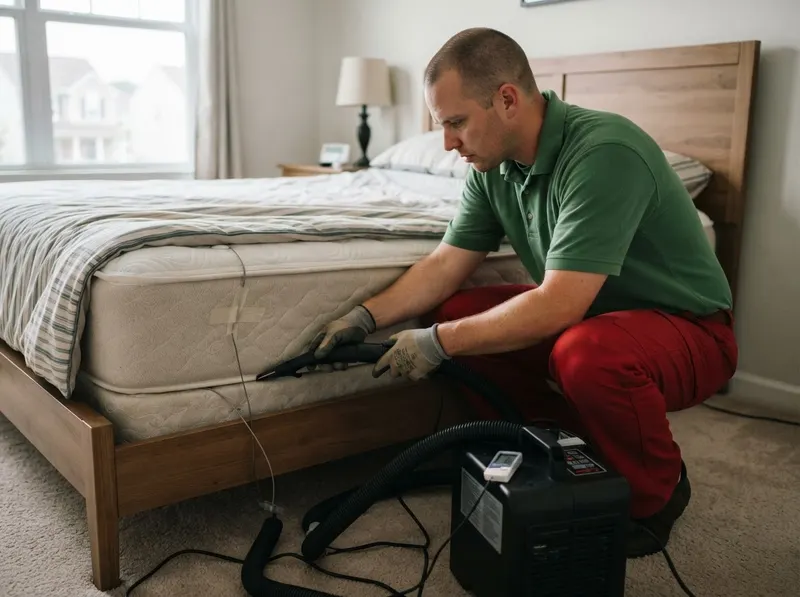
Thermal bed bug eradication operates on precise thermal dynamics: bed bug cellular proteins denature irreversibly at temperatures exceeding 118 degrees Fahrenheit, while commercial systems sustain target zones between 122°F and 135°F according to protocols established by the United States Environmental Protection Agency. In historic brick properties throughout German Village and Victorian Village, deep wall cavities and layered hardwood floorboards present thermal dissipation challenges that standalone aerosol treatments cannot solve. Industrial electric heaters and high-velocity air movers recirculate heated air through insulated voids, reaching deep into structural harborages where insects retreat. Unlike over-the-counter pyrethroid sprays, which trigger pest dispersal into adjacent rooms, controlled heating kills insects where they shelter. For property owners evaluating single-treatment heat versus recurring chemical sprays, the trade-off centers on upfront mobilization investment versus disruption duration: thermal interventions conclude within an 8-hour window, whereas multi-visit chemical sprays require three to five appointments spanning 45 days.
Following thermal knockdown, technicians apply localized microencapsulated non-repellent formulations along subfloor perimeters, behind electrical faceplates, and along baseboard tracks aligned with safety guidelines from the Occupational Safety and Health Administration. This residual barrier neutralizes any transient specimens carried back into the perimeter from exterior corridors. In dense multifamily housing units across Short North and Franklinton, structural connectivity allows insect movement along shared plumbing conduits; combining heat with long-chain chemical barriers prevents recolonization across shared drywall. Equipment monitoring adheres to scientific guidelines documented by the Entomological Society of America, utilizing digital wireless temperature sensors embedded inside deep upholstery and subfloor junctions to verify continuous lethal heat saturation.
Residential homes in Upper Arlington, Clintonville, and Bexley require systematic pre-treatment preparation to protect sensitive household items. Homeowners must temporarily relocate oil paintings, wax items, pressurized aerosol containers, medications, and sensitive electronics, following guidance outlined by the Centers for Disease Control and Prevention. Heat protocols eliminate the necessity of discarding expensive mattresses or structural framing. Technicians coordinate room airflow in accordance with indoor ventilation recommendations from the American Society of Heating, Refrigerating and Air-Conditioning Engineers, ensuring heat distribution balances evenly through ceiling plenums and cold spots near exterior masonry.
OakVanta Bug Specialists manages residential structural profiles ranging from 1920s plaster-and-lath constructions in Grandview Heights to contemporary mid-rise apartments near the Ohio State University campus. Field operations comply with commercial pesticide application standards regulated by the Ohio Department of Agriculture and local building and property management codes monitored through Columbus Public Health. Every remediation workflow integrates monitoring criteria set by the National Pest Management Association, ensuring zero unmonitored cold pockets remain inside insulated perimeter walls. Homeowners may schedule site evaluations through the central dispatch office at (216) 682-2040.
Every job gets a firm, written price after a free on-site visit.
Tell us about your bed bug heat and residual eradication job in Columbus and we'll send a clear, written quote, usually the same day.
 OakVanta Bug Specialists