Outdoor tick and flea suppression across Franklin County requires tactical intervention focused on moisture gradients and wildlife corridors rather than indiscriminate turf drenching. OakVanta Bug Specialists executes…
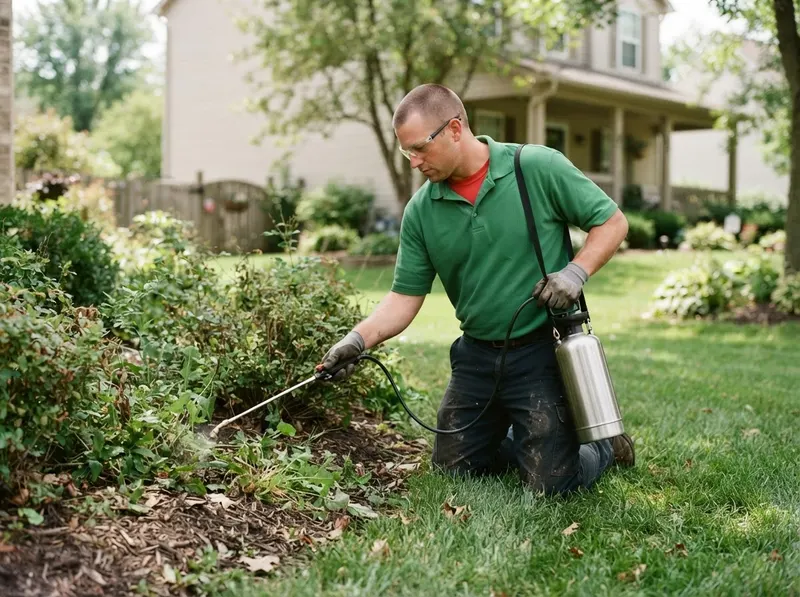
Outdoor tick and flea suppression across Franklin County requires tactical intervention focused on moisture gradients and wildlife corridors rather than indiscriminate turf drenching. OakVanta Bug Specialists executes calibrated applications using botanical-derived pyrethrins combined with juvenile hormone mimics that prevent flea larvae from pupating into reproductive adults. Shaded turf under established tree canopies in Clintonville and Bexley creates humid microclimates where flea pupae survive extended dry spells, while woodland fringes bordering stream corridors in Worthington and Upper Arlington host dense populations of white-tailed deer and rodents carrying vector-borne pathogens like Lyme disease. Following guidelines established by the Centers for Disease Control and Prevention, perimeter barriers concentrate on the 9-foot band where manicured turf transitions into low brush, stone walls, and decaying organic mulch.
Residential yards in historic districts like German Village, Victorian Village, and the Short North feature smaller, high-walled courtyards with limited air circulation and damp brick retaining walls. These tight urban footprints benefit from focused targeted spot treatments along baseboards, exterior ivy, and run areas rather than wide-swath motorized misting. Property managers overseeing larger lots near Grandview Heights, Hilltop, and Franklinton encounter higher flea egg reservoirs in shaded sandbox margins, beneath wooden decking, and along gravel walkways frequented by domestic pets. Applying targeted residual chemistries registered under the Environmental Protection Agency neutralizes adult biters on contact while remaining bonded to organic foliage through moderate precipitation. The Ohio biological baseline tracked by the Ohio Department of Agriculture indicates peak tick questing activity begins when daytime temperatures consistently exceed 45 degrees Fahrenheit, typically between early April and late October.
Choosing dedicated perimeter management over consumer granular treatments prevents chemical runoff into local watersheds such as the Olentangy and Scioto rivers. Over-the-counter granular options rarely penetrate deep thatch where flea larvae feed on adult flea dirt, leaving reproductive reservoirs intact beneath the surface. OakVanta Bug Specialists calibrates high-pressure hydraulic liquid equipment according to standards set by the Department of Entomology, driving droplets through dense grass stems directly into topsoil margins. Proper physical prep requires mowing the turf to a height of 2.5 to 3 inches and clearing fallen yard waste prior to arrival. Homeowners can review wildlife vector containment recommendations via the Ohio Department of Natural Resources Division of Wildlife to mitigate rodent travel routes along perimeter fences. For properties adjacent to extensive municipal greenways, cross-reference municipal landscape ordinances using the City of Columbus Recreation and Parks Department and property guidelines from Franklin County Public Health.
Effective control integrates biological exclusion alongside liquid applications. Homeowners should keep play equipment, dog kennels, and patio furniture elevated or placed in full-sun zones, as direct ultraviolet radiation naturally degrades tick survival rates. For extended protection across the warm months, treatments are systematically spaced at 28- to 35-day intervals, reflecting the typical 21-day life cycle of fleas under summer heat. Technical guidelines from the Pest Control Technology Association emphasize that skipping midsummer booster applications allows surviving diapause-stage pupae to reinfest properties following rainfall events. OakVanta Bug Specialists delivers clinical documentation following every treatment, detailing the active ingredient volumes applied and specific property re-entry dry times, typically 60 to 90 minutes, ensuring absolute safety for children and pets without residual chemical odors.
Every job gets a firm, written price after a free on-site visit.
Tell us about your flea and tick yard management job in Columbus and we'll send a clear, written quote, usually the same day.
 OakVanta Bug Specialists